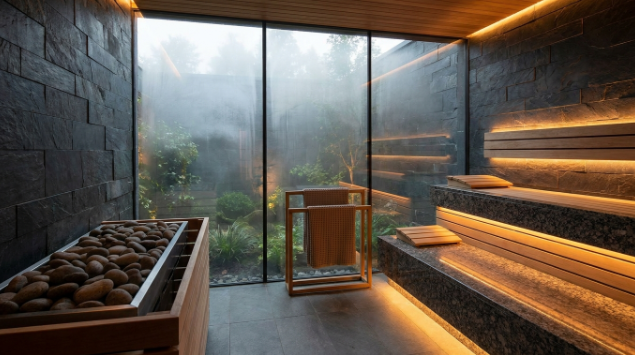
Western red cedar and heat-treated hemlock are the two wood species most builders reach for on a high-end sauna, and the choice comes down to aroma, cost, and how each wood behaves under repeated heat cycles. Cedar carries natural oils that resist rot and produce the strong scent people associate with a traditional sauna, and it typically costs 20 to 40 percent more than hemlock. Heat-treated hemlock gets its stability from a kiln process rather than natural chemistry, has a much fainter smell, and brings the price down without giving up much in durability.
What Makes Cedar the Default High-End Choice?
Cedar has been the standard sauna wood for generations, and a lot of that reputation comes down to the oils naturally present in the grain. Those oils give the wood resistance to rot and insects without any chemical treatment, and they release a distinct, resinous scent once the wood heats up, which is part of what many people expect a sauna to smell like. Cedar also has a light, warm color and a straight, consistent grain that reads as premium the moment someone opens the door, and it stays relatively cool to the touch even at high cabin temperatures because of its low density.
The tradeoff is supply and cost. Old-growth western red cedar in the clear, knot-free grades builders want for interior paneling is a limited resource, and demand from outdoor decking, siding, and furniture competes for the same lumber. That scarcity is a large part of why cedar sits at the top of most luxury sauna wood-cost tables.
How Does Heat-Treated Hemlock Get Its Stability?
Heat-treated hemlock starts as ordinary hemlock, a wood that is not naturally rot-resistant or particularly attractive for interior paneling on its own. A thermal modification process, typically running the wood through controlled heat above 350 degrees Fahrenheit in a low-oxygen kiln, changes its cell structure in ways that reduce its ability to absorb moisture and make it far less appealing to insects and fungi. The process also darkens the wood slightly and gives it a subtle, warm tone that some buyers prefer over cedar’s lighter color.
Because the treatment does the work that cedar’s natural oils do on their own, heat-treated hemlock does not need old-growth sourcing, which keeps the raw material cheaper and more consistently available. The scent that comes off it in a hot cabin is faint and slightly toasted rather than the strong cedar smell, which some buyers actually prefer if they find traditional cedar aroma overpowering in an enclosed space.
Which Wood Handles Heat and Humidity Better?
Both woods are built for the job, but they get there differently. Cedar’s natural oils continue to protect the wood as it ages and gets exposed to repeated heat-and-cool cycles, and it has a long track record in traditional sauna construction going back decades. Heat-treated hemlock’s resistance comes from the kiln process itself, which permanently changes the wood’s cell structure rather than relying on a coating or surface treatment that could wear off, so the protection does not fade the way a stain or sealant eventually would.
In a well-ventilated cabin with a properly installed vapor barrier behind the paneling, either wood should perform for many years without warping, checking, or losing its finish. Where problems show up in either species, it is almost always tied to poor ventilation or a missing vapor barrier rather than a flaw in the wood choice itself.
How Much Does the Wood Choice Change the Total Price?
On a mid-size luxury cabin in the 40 to 55 square foot range, choosing cedar paneling over heat-treated hemlock typically adds somewhere between $1,500 and $4,000 to the total build cost, depending on grade and whether the benches and backrests are also cedar or a secondary wood. Some builders split the difference by using heat-treated hemlock for the structural walls and reserving cedar for benches and trim, which keeps the tactile, high-contact surfaces in the premium wood while controlling the overall budget. Shoppers comparing full builds side by side can look at how the team at SweatDecks breaks out wood species and pricing on comparable luxury models before deciding which combination fits their budget.
Does Wood Choice Affect Long-Term Maintenance?
Neither wood asks for much upkeep inside a properly built cabin, since the interior is never exposed to standing water or direct weather. Cedar occasionally needs a light sanding on bench surfaces after years of skin contact and sweat exposure, mostly for appearance rather than structural reasons. Heat-treated hemlock holds its surface finish a bit longer under the same conditions because the thermal modification runs through the wood rather than sitting on top of it. Exterior cladding is a different story entirely and typically uses cedar or thermally modified wood regardless of what is chosen for the interior, since it faces sun, rain, and temperature swings the inside of the cabin never sees.
Which Wood Actually Fits a Luxury Build?
For buyers who want the classic sauna look and scent and are willing to pay for it, cedar remains the reference point, and it is still what most people picture when they think of a high-end cabin. For buyers who want that same premium feel with a lower material cost and a more neutral scent, heat-treated hemlock delivers comparable durability and a warmer, slightly darker tone that pairs well with modern glass-front designs. A growing number of luxury builds now mix the two, using heat-treated hemlock for the bulk of the interior and reserving cedar accents for benches, headrests, or trim where the aroma and color have the most impact. Climate plays a role too: buyers in humid coastal regions sometimes lean toward heat-treated hemlock for its consistent, manufactured resistance to moisture, while buyers in drier inland climates often find either wood performs equally well over the long run. Whichever species is chosen, pairing it with a properly sized heater and a sealed vapor barrier behind the paneling matters more to the wood’s lifespan than the species itself.
Frequently Asked Questions
Is cedar or heat-treated hemlock better for a luxury sauna? Neither wood wins across every category. Cedar has a stronger natural aroma and built-in rot resistance, while heat-treated hemlock costs less and has a more neutral scent from its kiln process.
Why does cedar cost more than heat-treated hemlock? Cedar’s rot resistance and aroma come from natural oils, and old-growth supply in the clear grades builders want is limited, which keeps demand and price high.
Does heat-treated hemlock still smell like a sauna? It has a faint, slightly toasted scent rather than the strong cedar aroma most people expect, which some buyers prefer in an enclosed cabin.
Which wood holds up better to years of high heat? Both perform well with proper ventilation. Heat-treated hemlock resists warping through its kiln process, while cedar’s natural oils protect it as it ages.
References
- Cardiovascular and Other Health Benefits of Sauna Bathing: A Review of the Evidence, Mayo Clinic Proceedings, 2018
- Clinical Effects of Regular Dry Sauna Bathing: A Systematic Review, Evidence-Based Complementary and Alternative Medicine, 2018
- Benefits and risks of sauna bathing, The American Journal of Medicine, 2001
- UL safety standards for dry-heat bathing equipment
By Derek Whitfield